Is Dubbing AI Safe? A Creator's Guide for 2026
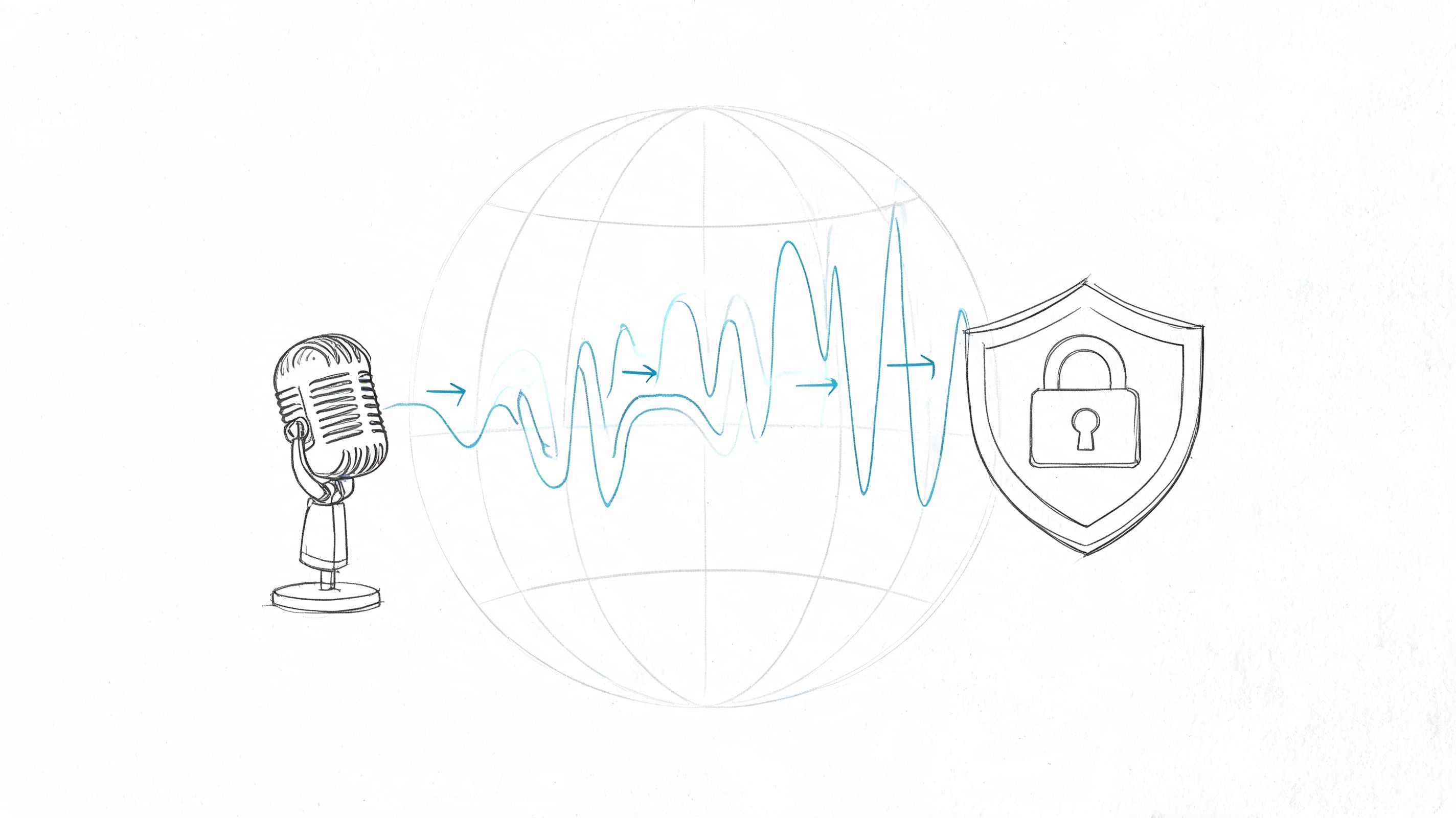
You’ve probably had this thought already. A video performs well in English, comments start coming in from viewers in other countries, and the opportunity is obvious. Your content could travel further if people could hear it in their own language.
Then the hesitation kicks in.
If you use AI dubbing, will the result sound awkward? Will a bad translation make you look careless? Beyond those concerns, what happens to your voice, your files, and your rights after you upload them?
That’s why “is dubbing ai safe” isn’t really a yes-or-no question. It’s a risk-management question. AI dubbing can be used responsibly and securely, but only when the platform, the workflow, and the creator’s decisions all line up.
For creators, that’s good news. You don’t need to understand every technical detail to make smart choices. You just need a clear way to evaluate the actual risks, separate quality issues from security issues, and know what protections matter before you trust a tool with your content.
The AI Dubbing Dilemma for Modern Creators
A YouTuber finishes a great explainer video. A course creator records a training module that finally feels polished. A podcaster turns a strong episode into clips for social media. The content is ready, but language becomes the bottleneck.
AI dubbing promises a way through that problem. It can help creators adapt one piece of content for many audiences without booking separate voice talent for every language. If you’re still getting familiar with the basics, this explanation of what dubbing means in movies helps clarify the original idea behind dubbing before you apply it to AI workflows.

The concern is reasonable. Dubbing touches the part of your content people notice first: the voice. If the delivery feels robotic, your authority slips. If the translation misses the point, your message changes. If the platform mishandles your audio, the problem goes far beyond a rough voiceover.
Why the question feels bigger than sound quality
Creators often bundle several fears into one sentence: “Is dubbing ai safe?” But they’re usually asking about different things at once.
- Brand safety: Will this make my videos sound less credible?
- Data safety: What happens to my recordings after upload?
- Ethical safety: Could this technology be used in ways I wouldn’t support?
- Legal safety: Am I allowed to use it this way, and are my own rights protected?
Those are different risks, and they don’t all have the same solution.
Practical rule: AI dubbing isn’t safe because a website says it is. It becomes safer when the platform limits misuse, protects data, and gives you enough control to review the output before publishing.
Safety sits on a spectrum
That’s the most useful frame for creators. One tool may give you careful review controls but weak privacy language. Another may lock down data well but make editing hard, which increases the odds of publishing a poor translation. A better platform reduces risk on both fronts.
The goal isn’t blind trust. It’s informed use.
Understanding How AI Dubbing Actually Works
AI dubbing can feel opaque until you separate it into parts. A clearer way to view it is as a production chain: one system listens, one interprets meaning, one performs the new voice, and one aligns that voice to the video.
That distinction is important because many creators mix legitimate dubbing workflows with deceptive deepfake use. The underlying technology can overlap, but the goals are different. In a standard dubbing workflow, you are adapting your own content for a new audience, checking the output, and deciding what gets published. The focus is localization and review, not impersonation.
The four-step pipeline
A comprehensive guide to AI karaoke illustrates a similar pattern in another media format. The polished result comes from several smaller stages working together, not from one magical button.
Here is the usual flow:
| Step | What happens | Why it matters |
|---|---|---|
| Transcription | The system turns spoken audio into text | Errors here can carry into every later stage |
| Translation | The text is converted into another language | Meaning, tone, and cultural nuance can shift here |
| Voice synthesis | The system generates new speech from the translated script | This shapes whether the dub sounds natural, flat, warm, or stiff |
| Lip-sync | The audio is aligned to the speaker’s mouth movements | This affects polish and viewer trust |
A simple analogy helps. It works like a relay race. If the first runner drops time, the next runner starts behind. AI dubbing behaves the same way. A small transcription mistake can become a translation problem, then a voice performance problem, then a visible sync issue by the time the video is exported.
Where confusion usually starts
Many creators assume the synthetic voice is the whole product. It is only one layer.
A voice can sound polished and still deliver the wrong meaning. A translation can be accurate and still feel unnatural if the pacing is rushed or the pronunciation of names and product terms is off. Lip-sync can look strange even when the wording is right. That is why safe use starts with understanding where failures can happen.
Control matters here. Platforms that let you review transcripts, edit translations, adjust pronunciation, and preview timing give you more ways to catch problems before publishing. If you want a clearer sense of the controls that shape natural delivery, this guide to realistic text to speech voices is a useful reference.
Good AI dubbing is closer to a fast first pass from a capable production assistant than a final cut you should publish without review.
Why this model changes the safety question
Once you see the pipeline, “Is dubbing AI safe?” becomes a more useful question: where are the risks in this workflow, and how much control do I have over them?
That framing is practical. Some platforms may perform well on voice quality but give weak editing controls. Others may let you review every line but struggle with timing. Safety sits on that spectrum. The safer choice is usually the platform that reduces risk at multiple points in the chain and gives creators review checkpoints before anything goes live.
Managing Technical and Quality Risks
The fastest way to damage trust with AI dubbing is to publish something that sounds wrong. Viewers may not know why a dubbed video feels off, but they notice it immediately. For educators, podcasters, and YouTubers, that moment matters because voice carries authority.
The technical risks usually fall into three buckets: sound quality, emotional accuracy, and translation fidelity.
When the voice sounds synthetic
A realistic script can still fail if the spoken result is flat, rushed, or oddly emphasized. This often shows up in tutorials, story-driven content, and brand videos where the original speaker’s rhythm is part of the appeal.
Creators should look for tools that let them adjust performance, not just select a language. Useful controls include pacing, pauses, pronunciation handling, and previewing before export.
A practical check is simple:
- Listen for sentence endings: Do they drop naturally, or do they sound chopped off?
- Check names and product terms: Technical words often expose weak pronunciation handling.
- Test different speaking speeds: Some scripts sound more human when slowed slightly.
- Review transitions: A voice can sound fine line by line and still feel mechanical across a full paragraph.
When the emotion doesn’t match the message
This risk is subtle but serious. A course lesson should sound calm and clear. A product announcement may need energy. A sensitive story should never sound cheerful by accident.
If the emotional tone drifts, the audience may question the speaker’s intent. That hurts creators who rely on trust, especially in education and commentary.
A safe dubbing workflow includes a human approval step, even when the first draft sounds impressive.
When the translation changes meaning
This is the most overlooked risk because the audio may still sound polished. A translation can preserve grammar while altering emphasis, softening a warning, or making a promise more absolute than the original.
That’s why moderation and review features matter. According to All Voice Lab, AI dubbing platforms with effective safeguards, such as user-controlled adjustments and prohibited content blocking, have shown error rates in ethical systems dropping below 5% for mistranslations, and tools with preview flows and moderation controls can cut brand risk from misstatements by up to 70% in accuracy-sensitive contexts like e-learning and YouTube (All Voice Lab on dubbing safety controls).
What strong quality control looks like
A creator-friendly platform should help you catch mistakes before your audience does. Look for workflows like these:
| Risk area | Helpful safeguard | What it protects |
|---|---|---|
| Voice realism | Adjustable speed, pauses, and pronunciation | Natural delivery and brand credibility |
| Tone mismatch | Multiple previews and easy revision cycles | Emotional fit with your original content |
| Translation drift | Glossary support, moderation, and human review | Accuracy of meaning |
The bigger point is simple. Technical safety isn’t only about whether the app runs securely. It’s also about whether it helps you avoid publishing something that weakens your reputation.
Protecting Your Voice Data and Intellectual Property
For many creators, this is the core question behind “is dubbing ai safe.” They’re less worried about one awkward sentence and more worried about losing control of their own voice.
That concern is justified. Your voice isn’t just content. It’s part of your identity, your brand, and in some cases your business itself. A secure dubbing platform should treat that data the way a bank treats money in a vault. Access should be limited. Storage should be protected. Retention should be clear. Deletion should be possible.

What secure handling actually looks like
A lot of privacy language sounds reassuring without saying much. “We respect your data” isn’t enough. You need specifics.
Murf’s overview of dubbing safety notes that reputable tools implement end-to-end encryption, including AES-256 standards, role-based access control, and zero-retention policies post-processing, reducing breach risks by 90% according to industry benchmarks. It also notes that platforms without explicit consent rules or that keep data indefinitely can violate frameworks like GDPR and the EU AI Act (Murf on secure voice data practices).
Those terms sound technical, but the practical meaning is straightforward:
- End-to-end encryption: Your files are protected while moving through the system and while stored.
- Role-based access control: Not everyone inside a company should be able to touch your audio.
- Zero-retention or clear deletion policies: The platform should explain whether your voice samples remain after processing.
- Explicit consent workflows: A tool shouldn’t assume it can clone, reuse, or train on your voice just because you uploaded a file.
Questions worth asking before you upload
Most creators never ask these until after something feels off. Ask them first.
- Does the provider explain retention clearly? If the policy is vague, assume the answer isn’t in your favor.
- Is your uploaded voice used for model training? If yes, is that opt-in or automatic?
- Can you request deletion? A real answer should describe the process, not hide behind support language.
- Are there controls for who can create or access cloned voices? Team features need guardrails.
- Does the company explain consent standards? This matters even if you’re only dubbing your own content.
If a platform is clear about encryption but fuzzy about retention, keep looking. Storage policy is where many creators lose leverage.
Your voice is also an IP issue
Voice misuse isn’t only a privacy problem. It can become an intellectual property and rights problem, especially for founders, creators, and anyone building a recognizable personal brand. If you want broader background on ownership and protection principles, these resources on startup IP offer useful context.
A careful creator keeps records too. Save consent agreements, document who supplied source audio, and keep version histories for dubbed releases. That habit won’t make your content better, but it can make disputes much easier to resolve.
Navigating the Legal and Ethical Landscape of 2026
A creator records a course in English, dubs it into Spanish with AI, and publishes it the same day. The workflow feels simple. The legal and ethical questions are not. In 2026, AI dubbing safety works less like an on or off switch and more like a risk dial. The farther you move from your own content, your own voice, and clear audience disclosure, the more risk you add.

What current rules mean in plain language
Lawmakers are paying closer attention to synthetic media because voice can function as part of a person’s identity, public image, and commercial value. In practical terms, that means your voice is not just an audio file. It can carry rights tied to consent, publicity, and misuse.
The safest zone is straightforward. You own the source content, you have permission to use the speaker’s voice, and the dubbed version stays faithful to what the speaker said.
Risk rises when any of those conditions break.
A useful comparison is subtitles. Good subtitles preserve meaning in another format. Safe AI dubbing aims for the same result in another voice track. It should translate and perform the original message, not create a false statement, fake endorsement, or imitation that changes who appears to be speaking.
Rules also vary by region. If your audience, business, or collaborators touch multiple markets, it helps to review local guidance early. This guide to Israeli AI legal frameworks is one example of how country-specific AI rules are developing.
The ethical line creators should respect
Ethics usually gets clearer when you ask one simple question. Would a reasonable viewer feel misled?
If the dubbed audio preserves the speaker’s intent and you have the right to publish it, you are in a much safer category. If the output makes it sound like someone said words they never approved, risk increases fast.
Problem cases usually include:
- Cloning a person’s voice without clear permission
- Editing meaning so the dubbed version says something materially different
- Using synthetic speech to imply endorsement, testimony, or authorship that is not real
- Publishing sensitive or commercial content without checking local consent and disclosure rules
Ethical dubbing keeps the speaker’s identity and message intact across languages.
Why this matters even for smaller creators
These rules do not only apply to celebrities or major studios. A course creator, consultant, founder, or YouTuber may rely on voice and reputation as part of the business itself. If your audience trusts your face, name, and speaking style, AI dubbing decisions affect brand trust as much as production speed.
The technical setup matters too. Teams often connect dubbing, speech generation, and publishing tools through APIs. If you want a clearer sense of how voice systems plug into products and workflows, this overview of a text-to-speech API for voice applications helps explain the building blocks behind those decisions.
This short video gives a useful visual snapshot of how AI law and ethics are evolving.
A practical test before you publish
Before releasing dubbed content, run through these checks:
| Question | If the answer is no |
|---|---|
| Do I own or control the source material? | Pause and confirm rights first |
| Do I have permission to use this voice for dubbing? | Do not publish |
| Does the dubbed version preserve the speaker’s original meaning? | Revise and review again |
| Would the audience understand what is original and what is dubbed? | Add disclosure where needed |
| Have I checked the final audio for tone, accuracy, and unintended claims? | Review before release |
Creators do not need a simple yes or no answer to AI dubbing safety. They need a way to lower risk. Clear consent, accurate translation, honest presentation, and region-aware review are what keep dubbing in the safer part of the spectrum.
How to Choose a Safe AI Dubbing Platform
When you compare tools, don’t start with voice demos. Start with trust signals. A polished sample means very little if the provider is vague about consent, storage, or review controls.
A safe platform should make it easy to answer basic questions about privacy, editing, and ownership before you create anything.
What to look for first
Use this checklist when evaluating a provider:
- Transparent privacy policy: You should be able to understand what happens to uploaded audio, whether it’s stored, and whether it can be used for training.
- Clear consent rules: Voice cloning should never feel automatic or ambiguous.
- Editable output: A provider should let you adjust pacing, pronunciation, and performance rather than forcing one rigid render.
- Review workflow: You need previews and revision steps before publishing.
- Data protection details: Look for specifics, not broad promises.
- Misuse controls: The platform should have a stance on impersonation and deceptive content.
Then evaluate how it fits your workflow
The safest tool is one you’ll review carefully. That means the interface matters. If editing a mistranslated line takes too many steps, creators skip the check. If pronunciation correction is clumsy, mistakes stay in the final export.
This is also where broader legal awareness helps. Rules vary by market, and if your audience or business touches multiple jurisdictions, it helps to keep an eye on specialized legal analysis such as this guide to Israeli AI legal frameworks, especially if your work involves international distribution or AI-heavy product operations.
A simple pass-fail table
| Platform question | Safe answer | Risky answer |
|---|---|---|
| What happens to my voice data after processing? | Clear retention or deletion policy | Vague or indefinite |
| Can I review and edit output before publishing? | Yes, with practical controls | Minimal editing |
| How is voice cloning handled? | Consent-based workflow | Broad default rights |
| Does the provider explain technical capabilities clearly? | Specific and understandable | Marketing-heavy but unclear |
A related factor is extensibility. If you’re building a larger content workflow, product clarity around integrations matters too. This overview of a text to speech API is useful for understanding what to ask when a platform is part of a bigger publishing stack.
The safest platform is rarely the one making the loudest claims. It’s the one that answers uncomfortable questions plainly.
Conclusion Your Secure Partner in Global Content Creation
AI dubbing can be safe. But safety doesn’t come from the label “AI,” and it doesn’t come from a single feature on a pricing page.
It comes from a stack of choices. Choose a platform with clear data practices. Use tools that let you review translation and delivery before publishing. Respect consent. Treat your voice like an asset, not just an input file. Follow the legal line where localization ends and impersonation begins.
That’s the key answer to is dubbing ai safe. It’s safe when creators manage the risks they can control and refuse the shortcuts that put their brand, audience, or voice data at risk.
If you take that approach, AI dubbing becomes less intimidating and more practical. It turns into what most creators need: a way to reach more people without giving up quality, trust, or ownership.
If you're ready to create multilingual voiceovers with more control, Lazybird is built for creators who want professional results without the usual production hassle. You can generate studio-quality voiceovers in 100+ languages and accents, fine-tune pitch, speed, pauses, pronunciation, and tone, and even create a custom AI voice from your own recordings. For YouTubers, podcasters, course creators, and social media teams, that means you stay in control of the performance while scaling your content for a global audience.
