Create a Text to Speech Audiobook with AI in 2026
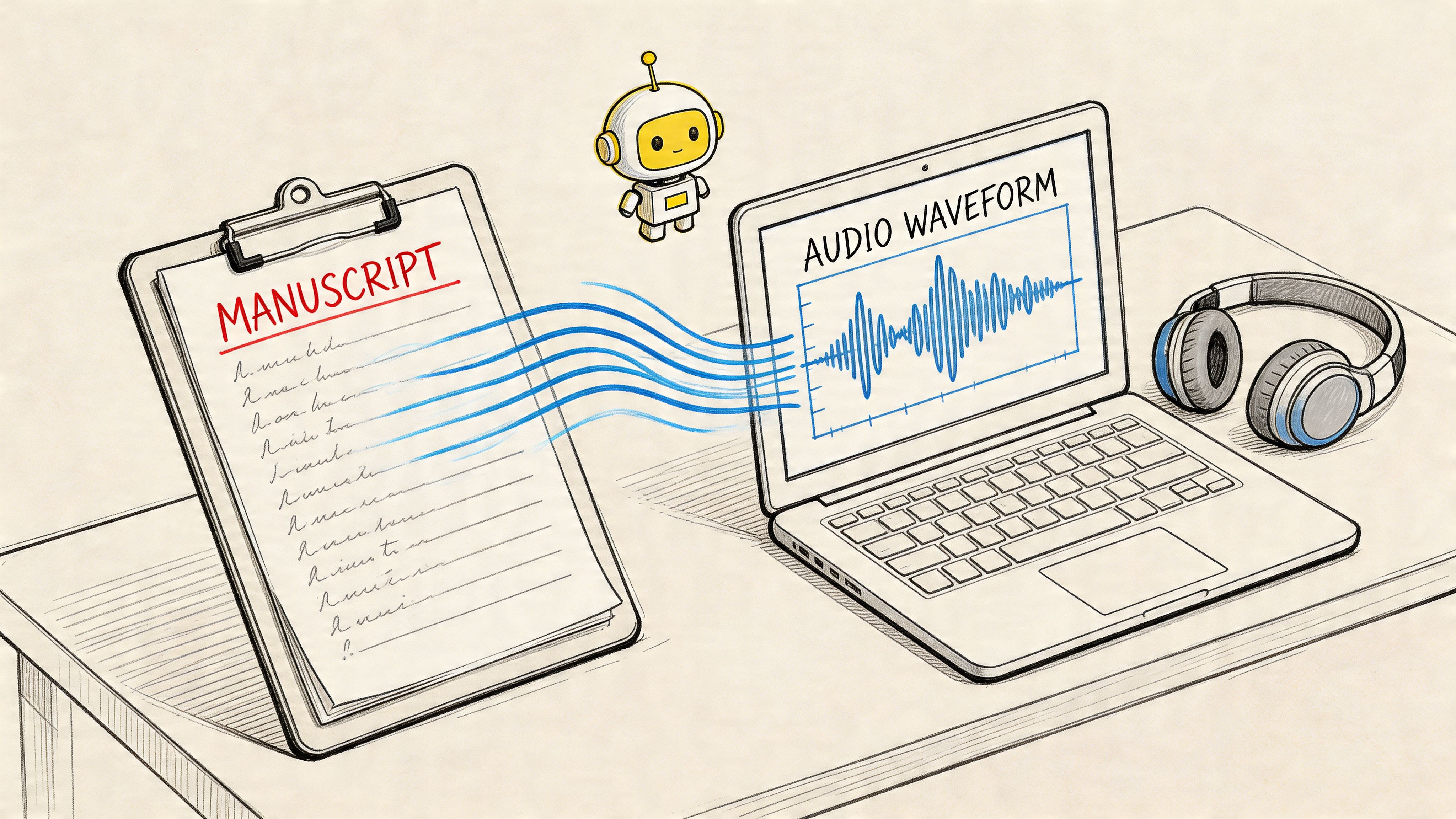
A text-to-speech audiobook is what you get when you use AI software to turn your written manuscript into spoken audio. It’s a game-changer for authors, offering a way to create high-quality audiobooks without the massive cost and long timelines of traditional production.
This technology is breaking down old barriers, finally making audiobooks an accessible option for independent authors and smaller publishers who were previously priced out of the market.
Why AI Narrators Are a Big Deal for Audiobooks
The audiobook world is on fire right now, and AI narration is making sure every author has a chance to get in on the action. Not long ago, creating an audiobook was a huge undertaking. You were looking at thousands of dollars and months of work just for recording, editing, and mastering. For many indie authors, that was a non-starter.
But today, text-to-speech has completely flipped the script. With a platform like Lazybird, you can produce a professional-sounding audiobook in a sliver of the time and for a fraction of the cost. This isn’t about replacing the art of human narration; it’s about giving creators a powerful new way to reach their audience.

To really see the difference, let's look at a quick comparison.
Traditional vs AI Audiobook Production
| Factor | Traditional Narration | AI Text to Speech (e.g., Lazybird) |
|---|---|---|
| Cost | High ($2,000 - $10,000+) | Low (Subscription or pay-per-use) |
| Time | Weeks or months | Hours or days |
| Control | Limited (Rely on narrator/studio) | Full creative control |
| Revisions | Costly and time-consuming | Quick and easy |
| Voices | One narrator (usually) | Hundreds of voices to choose from |
The table makes it pretty clear. For authors who want to move quickly and stay in control of their budget and creative vision, the AI route offers some serious advantages.
More Control, More Freedom
The biggest win for authors is control. You get to be the director of your own audiobook. You can hand-pick the perfect AI voice for your story and fine-tune its performance.
Forget the robotic voices of the past. Modern AI voices can deliver real nuance and emotion, especially when you have tools to adjust their pitch, speed, and pauses. It’s no surprise that authors are now using AI for complex stories, with 80% of multi-cast usage on some platforms driven by the need for diverse, expressive characters.
This really boils down to making audiobooks accessible for everyone. Any author can now turn their book into an audiobook, opening up a new way to make money and connect with listeners who prefer to consume content through their ears.
This trend isn't just in audiobooks. It's a huge part of the broader shift toward AI-powered content creation that’s happening everywhere. If you're an author looking to expand your brand, getting familiar with the role of an AI voice actor is your first step into this new world.
Preparing Your Manuscript for an AI Voice
The secret to a fantastic AI narration doesn't start when you hit the "generate" button. It actually begins much earlier, with your manuscript. The best results from a text to speech audiobook come from a script that has been carefully prepared. Think of it as setting the stage for your AI voice actor to give its best performance.
Your first job is to do one last, meticulous proofread. A human narrator can easily glide over a small typo or a grammatical hiccup, but an AI will often read it literally. This can lead to some truly awkward pronunciations and unnatural pauses. A clean script is your foundation for a clean recording.

Part of this prep work also involves thinking about the audio format itself. We have a whole guide on how to write a great script for a voice over, and many of those tips apply directly to audiobook creation as well.
Formatting for Narration
With your text polished and error-free, it's time to focus on the formatting. AI narrators are literal interpreters, so you need to give them clear directions right there on the page.
- Dialogue: Make sure your dialogue is formatted cleanly. Standard quotation marks and putting each speaker's lines in a new paragraph are crucial. This helps the AI tell the characters apart, especially if you're planning on using different voices for each one.
- Unique Words: Got tricky names, technical jargon, or made-up words for your fantasy novel? Phonetic spelling is your best tool. If a character is named "Siobhan," you can simply write
(shuh-vawn)after the first time it appears to guide the AI's pronunciation. - Paragraphs: Long, dense walls of text are tough for an AI to perform naturally. Breaking your content into shorter paragraphs not only looks better on the page but also gives the AI narrator built-in spots to pause, which dramatically improves the rhythm and flow of the final audiobook.
When you clean up and format your manuscript beforehand, you’re doing more than just saving yourself editing headaches later. You are actively directing the AI’s performance. Every tweak you make on the page has a direct impact on how polished and professional the final audiobook sounds.
Getting this prep work done upfront ensures a tool like Lazybird can understand your creative intent right from the start. You'll get a much smoother, higher-quality narration from the very first take.
Choosing the Right AI Voice for Your Story
Picking the right AI voice isn't just a technical choice—it's about casting the lead role in your audiobook. This decision shapes the entire personality of your story, turning a simple script into an immersive experience. The voice you select becomes the voice of your story for every single listener.
The real secret is to match the narrator to your material. A crisp, no-nonsense voice might be just the ticket for a non-fiction guide on business strategy. But for a heartfelt memoir, you'll want someone warm and relatable. Writing a sci-fi epic? Maybe try a voice with a subtle, hard-to-place accent to build that otherworldly atmosphere.
Finding Your Narrator in the Voice Library
Alright, this is where the fun really starts. When you open up a platform like Lazybird, you're not just scrolling through files. You’re auditioning talent. With a library of over 900+ unique voices covering different ages, accents, and tones, it's worth taking your time.
Don't just pick the first one that sounds good. Listen for a few crucial qualities:
- Natural Pacing: Does the voice pause correctly? Does the rhythm feel like a real conversation, or does it sound stilted?
- Emotional Range: Can the voice handle a shift in tone? Try it out with a line of happy dialogue, then immediately follow it with something more serious.
- Clarity: Is the narration easy to follow? You need a voice your audience can listen to for hours without feeling fatigued.
Your narrator’s voice sets the mood from the very first sentence. A good match will pull the listener into your world, while a poor choice can be distracting and pull them right out.
This entire process is central to the modern text to speech audiobook revolution. The demand for these high-quality, affordable voice solutions is absolutely booming. In fact, the global text-to-speech market is expected to jump from $3.87 billion in 2025 to a staggering $7.28 billion by 2030. You can read more about this explosive growth and how it’s changing content creation.
Considering Advanced Voice Options
Don't feel locked into using a single narrator for the entire book. If your story is heavy on dialogue, assigning different voices to different characters can make the listening experience so much more dynamic and engaging. Think about it: a gruff, deep voice for your grizzled detective and a lighter, energetic one for his witty sidekick.
And if you want the ultimate personal connection, tools like Lazybird even offer voice cloning. This incredible feature lets you create a digital version of your own voice. You can personally narrate your story without spending weeks locked in a recording booth. It’s an incredibly powerful way to connect directly with your audience.
Directing the AI Performance to Sound Human
Okay, you've got a clean script and a voice that feels right. Now for the fun part. This is where you put on your director’s hat and shape the raw audio into a truly captivating performance for your text to speech audiobook.
This isn't about just hitting "generate" and calling it a day. With a solid editor like the one in Lazybird, you get to dive in and control the tiny details that make a narrator sound human. A slight lift in pitch can signal a character’s excitement, while a lower, more measured tone adds gravity to a serious moment.
It’s this level of fine-tuning that makes all the difference, elevating a robotic read into something that feels authentic.
Mastering Pace and Pauses
Some of the most powerful tools in your arsenal are speed and silence. Think about it. In a tense chase scene, you'd naturally want the narration to speed up, pulling the listener to the edge of their seat. For a big reveal, slowing things down gives the moment the weight it deserves. It’s all about matching the audio's rhythm to the story’s emotional pulse.
Pauses are just as critical. They’re the breathing room. A well-placed pause gives your audience a second to process a key detail or let a punchline land properly. Inside Lazybird, you can drop in these moments of silence with surgical precision—a quick 0.5-second beat here, a longer one-second pause there—to create a natural cadence.
Think of it like a musical score. The words are the notes, but the rhythm, tempo, and rests are what create the melody. Directing an AI voice is about composing that melody to create a truly engaging listening experience.
Of course, this all starts with picking the right instrument. This is a great breakdown of how to approach choosing the voice you'll eventually direct.

As you can see, a lot of it comes down to matching the voice to your book's genre and experimenting with different options—you can even get creative with multi-voice casting for different characters.
Perfecting Every Word
Let’s be honest, even the most advanced AI can trip over a fantasy place name, a bit of technical jargon, or an unusual surname. This is where pronunciation controls are a lifesaver. Instead of just sighing and accepting a butchered word, you can step in and teach the AI exactly how it should sound.
It’s surprisingly easy to do.
- Specify Phonetics: You can provide a simple, phonetic spelling to get the AI on the right track. Think "FEN-riss" for "Fenris."
- Save for Later: With a platform like Lazybird, you can save these custom pronunciations to a library. This is a huge time-saver that keeps your audio consistent across the entire book.
It's this focus on the small things that makes your audiobook sound polished and professional. You're not just converting text anymore; you're crafting a performance.
Exporting and Publishing Your Finished Audiobook
Alright, you've tweaked and polished every last pause and pronunciation. Now it's time to get your text to speech audiobook out into the world. This is the final, crucial step where your project leaves the editor and lands in your listeners’ libraries.
Lazybird makes this part straightforward. You can download the entire book as one high-quality audio file or export it chapter by chapter. The goal is to end up with files that meet the strict technical specs of distributors like Audible (through ACX) and Findaway Voices.

Getting this right means you’re tapping into a market that’s absolutely exploding. The global audiobook industry is on track to grow from $6.5 billion in 2024 to a mind-boggling $39.1 billion by 2032. The opportunity here is massive.
Meeting Platform Requirements
Every distribution platform has its own rulebook, but thankfully, they all share a common set of core requirements. Think of it as a quality control checklist to ensure every audiobook sounds professional.
Here’s what you’ll almost always need to provide:
- File Format: Stick with MP3s. It's the universal standard.
- Bitrate: Your audio must have a constant bitrate of at least 192 kbps. Don't use variable bitrates.
- Chapters: Each chapter, plus your opening and closing credits, must be its own separate audio file.
- Audio Levels: All your files need to have a consistent volume. They also have to be clean and free of any distracting background hiss or noise.
Even with today's incredible AI voices, a little post-production can make a huge difference. Getting that professional finish often means cleaning up the audio to achieve crystal clear sound.
Once you export your files from Lazybird, you can upload them directly to your chosen distributor. And if you’re looking for other ways to repurpose your content, our guide on creating text to speech for Kindle can help you expand your reach even further.
Common Questions About AI Narrated Audiobooks
As you start exploring the idea of a text to speech audiobook, you’re bound to have some questions. It’s totally natural. This tech has moved so fast, and a lot of creators are trying to figure out what's real and what's just hype. Let's dig into some of the things that come up most often.
The big one is always emotion. Can an AI voice actually sound like it feels something? The old, flat robotic voices are a thing of the past. Today's AI, especially when you're in the driver's seat with a tool like Lazybird, can deliver a performance packed with nuance—whether you need warmth, tension, or genuine excitement. You’re the director, adjusting the pitch, speed, and pauses to shape the emotional core of every single line.
Key Considerations for AI Audiobooks
Another question I hear a lot is whether listeners can tell it’s an AI. For non-fiction, where you really just need clarity and an authoritative tone, most people won't notice a thing. The quality is that good. With complex fiction, a very sharp ear might still pick it out, but that gap is closing incredibly fast.
Then there’s the legal side. Can you actually sell an audiobook that's narrated by an AI? Absolutely. When you use a professional platform like Lazybird, the commercial rights are typically baked right into your subscription. That means you're free to publish and sell your finished audiobook on all the major platforms without getting tangled up in licensing headaches.
But the real game-changer? It’s the cost. Traditional audiobook production is notoriously expensive and can easily run you thousands of dollars. AI narration smashes that barrier, offering an affordable, scalable way to get your book into listeners' ears.
This isn't a niche trend; it's a massive shift. The global audiobook market hit $6.2 billion in 2024, and AI-generated titles are projected to account for a whopping 23% of all new releases next year. As these tools get even better, it’s also smart to keep an eye on the bigger conversations around topics like AI agents and the ethics debate.
Ready to hear it for yourself? Lazybird makes it incredibly easy to turn your text into a professional audiobook. With over 900 AI voices, multi-speaker support, voice cloning, and a simple but powerful editor, you have everything you need to create captivating audio. Try it for free at https://lazybird.app and start your audiobook today.
